Friday, August 24, 2007

Autumn


Crisp autumn mornings give me something of my childhood;
The chill in the air, the sun bright-shining,
Diamond strung cobwebs, touch some hidden cord
Which reaches back through time
To that distant happiness. They rouse the wish
To trample rustling leaves deeply lying in their
Red-gold masses under glorious trees,
Trees ripe for climbing in those far off days
Before the turmoil of newly attained adulthood
Swept away the child’s world
Into the fine-wrought halls of memory.

Sunday, August 19, 2007

Monday, August 13, 2007

A Welsh Harp Walk


I like to make collages but this is only a lazy picasa 2 made one.
At least it is from my own photos.

Posted by Picasa

Monday, August 06, 2007


This is a sweet little Victorian House which belonged to my Grandmother Rosetta. When I was a little girl I

had 48 farthings saved in it. I felt rich. It was originally intended to be a money box. It is now about 120 years old.


Posted by Picasa

Thursday, August 02, 2007

Looking Back Through Memory’s Veil

I look back through memory’s veil
To that distant child living through history
And approaching chaos.
What in that early time led to the present being?
A variety of influences played their parts:
That fearsome headmaster , tall and ramrod straight,
Was countered by parents of tolerant authority.
There was a brother so small and so determined in his play,
So full of imagining ,
So much an individual.
Wide fields and tall trees were there
For love of the wilderness and joy of freedom.
Fetes and concerts divided the year, each to its own season.
A witch’s deserted hovel was a place of terror.
Never to be entered.
Death was a part of it,
A well loved Grandad taken in old age.
Many of poverty’s children were a part of that time,
Poorly clad scraps of humanity with
Noses so runny, faces so dirty and plimsolled feet in pouring rain.
“Land of Hope and Glory?”
Later there was the convent ,
An austere place of black-robed gliding figures,
The smell of polish, lead pencils and yesterday’s dinner.
Crocodiles of schoolgirls demurely curtsey passing Reverend Mother
Hiding their frolicksome hearts beneath severely uniformed exteriors.
That French nun who taught us the Marseillaise,
Was she homesick?
Trees, river marshes, those fields so wide and free
Awaited the return from days at the desk
And academic enforcement.
Was there ever such freedom again
As the holidays brought?
There was time to run, time to climb,
Woodland exploration and riverside adventures with laughing companions.
But there was also fear.
Fear of the rapidly approaching dread shadow of conflict
Sometimes entered the child’s mind,
Momentarily blotting out childhood.
The sharp axe of war crashed down,
Slicing through that far off world with terrible sureness.
Somewhere, beyond eternity, do those sun-lit children still play?

Saturday, July 28, 2007

A Day Out in WW2

To go for a day out on my bike with a friend was one of my great pleasures when I was in my early teens. To set off early in the morning with a packet of sandwiches, a flask of tea in my saddlebag and the open road ahead was wonderful. It appealed to the gypsy in me.
We would set off early in the morning and cycle towards Battlesbridge where we would cross the bridge over the River Crouch. Once over we were in what was to us distant country, far from home. The roads were quiet and the miles sped by. On and on we would go. It was wonderful. We even got as far as the River Blackwater on one outing which was amazing. On that occasion we spotted a tank moving about near the river so we beat a hasty retreat! We did not want to get caught up in army manoeuvres of some sort. Remember, this was wartime.
Although I remember those days as being always sunny I know that there were occasions when the rain poured down. There was the time when there was pelting rain for the last fifteen miles or so of the journey home. This must have been after the war had ended as we were rowed across the river by Mr Swanborough who regularly ferried people, bikes and all, from Burnham to the opposite side of the Crouch and vice versa of course. I know I was a drowned rat by the time I arrived home. Even so, the memory is of a happy day.
The whole atmosphere of those days out was the feeling of freedom that we had. There was little traffic on the roads, and for a few hours we were away from any sort of worry. I don’t think it would be possible to find that feeling in many places these days. There is tension in the air.

Friday, July 20, 2007

An Edwardian Wedding

I think this is a beautiful old family wedding photograph. The young girl with the lovely white hat is my mother. In the back row standing up higher than the others is my Uncle Dick.

Sunday, July 15, 2007

Then and Now

As it seems fashionable at present to consider whether one is a survivor or not here are some memories of my very distant child hood.


Here are some of the things I did as a child and as a young adult which would be considered highly dangerous these days.

I would ride my bicycle without a helmet,
Climb very high trees.
Ride on horse back without a helmet,
Roller skate through the village on the main road,
Explore woods and marshlands by a river,
Go out for a whole day with a friend and a packet of sandwiches, again exploring so that no one would know where we were,
Paddle in a river having no idea how deep it might be and of the danger of drowning,
I remember the great pleasure of hanging on the back of a horse drawn milk float on my roller skates. As the side roads were all unmade in those distant days anything to do with roller skates had to be on the Main Road

As a young adult during WW2 I walked home from dances and the cinema with friends while anti aircraft guns were firing and shrapnel was falling on the pavements along which we were walking.

I was in a First Aid group at the age of sixteen. The group was short of one steel helmet and as I was the youngest I did not have one. I borrowed my Dad’s. As things turned out I did not need it.

As I am a very ancient lady indeed I think I must be a survivor. It amuses me to compare “then and now”.

Saturday, June 30, 2007

A cactus of mine.

This must be the last of the flowers for the time being. It is a jolly little cactus which only started flowering a couple of years ago. I had it for a long time before that.
Posted by Picasa

Wednesday, June 27, 2007

More trees

These trees are at the end of our garden. I like them silhouetted against the bright blue sky. We have not had many of those skies lately.
Posted by Picasa

Monday, June 25, 2007

I posted this through picasa 2. Amazingly easy.
Posted by Picasa

Saturday, June 23, 2007


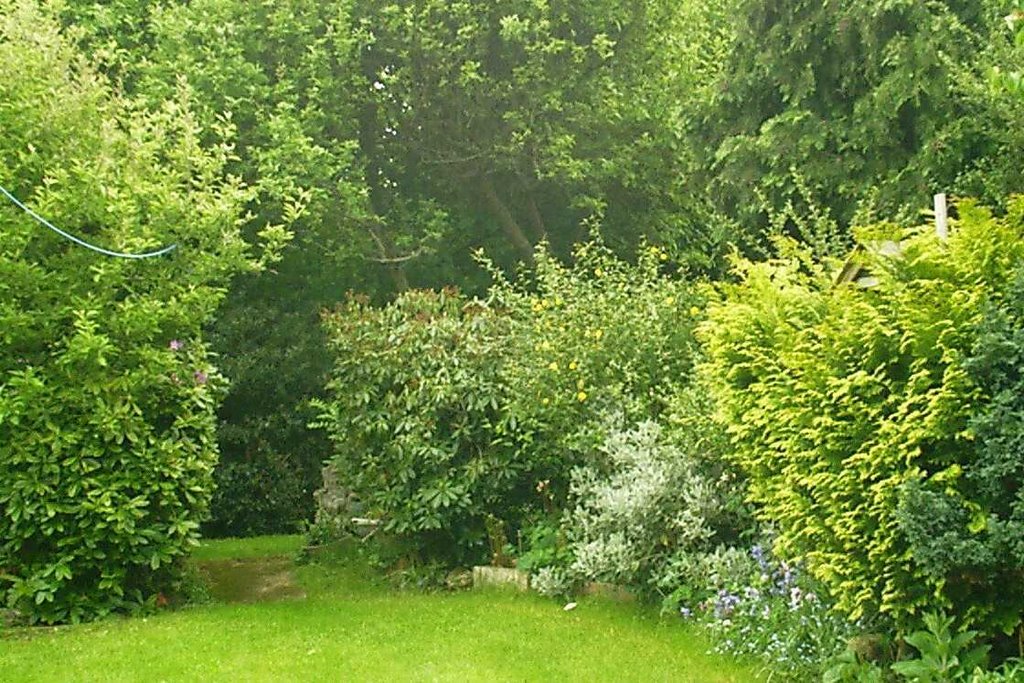
Here are some flowers from our garden as a change from trees,


Wednesday, June 20, 2007


We have just recently come home from a lovely family visit to Yorkshire. This is Pixie, the family cat. He is beautiful.
I have not yet recovered from the visit. It takes time to get into London mode after being a couple of hundred miles away. We had only just got over our lovely stay in Edinburgh.
Where shall we go next, I wonder!

Monday, June 18, 2007


We are home again after our trip to Yorkshire. The time went by too quickly.

Thursday, May 31, 2007

I have been adding bits to my previous post and now there is a blank space at the end of it. I don't know how to rectify it. How aggravating.

Wednesday, May 16, 2007

The Green Man and his relationship to Herne the Hunter

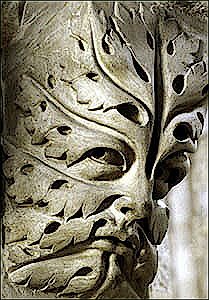
This Green Man hangs below our grape vine.


The Green Man is probably an ancient symbol of Life and Death. Winter's death and Spring's rebirth, the perennial cycle of Spring sowing leading to the joyful harvest of Autumn and its many celebrations.Or is he the archetypal spirit of the woodland long believed to haunt the sylvan depths. This sometimes quaint or sometimes rather frightening face, surrounded with leaves which in many cases come writhing from the eyes and mouth and even from the nostrils, has been with us since pre Christian times. He is to be found in the Middle East, even as far as India, and all through Europe. He has been Pan, Baachus, and in the medieval age Robin Hood, that Green clad hero of Sherwood Forest. And what about Sir Gawain and the Green Knight?

The Green Man as a foliate head is to be found in many churches and cathedrals in Britain and Europe, hiding away amongst carvings on the pillars,gazing down from a high roof boss, and sometimes even among the carvings behind the altar. He is as much a part of the ancient church or cathedal as the angels. How can this be? I feel that he was almost certainly placed there by the medieval stonemasons as a protection from the possible failure of the new religion, an appeal to the old pagan gods who have never entirely left us. We have only to look at the names of our weekdays, and the name of the goddess, Eostre,still kept for the greatest Christian festival. And don't forget Yule, the pagan midwinter festival, still remaing as Yuletide or Christmas.

I can well inderstand the feelings of the people who lived their lives in a land which had large areas covered with woodland. There must have been a sense of mystery felt while walking amongst the great trees, and thoughts of possible spirit beings there are quite understandable. Was the Green Man brought to this island in ancient times when humans first crossed by the land bridge that existed then. Maybe they brought the Green Man with them and found he fitted very well into the new land.

How did the belief in this woodland spirit come to the Celtic peoples who arrived here later? How did how get to India and the Far East? I have some thoughts on this that I will carry onto the next paragraph.

It is now generally believed that the human race came into being in Africa. I am wondering if there is a possibility that the concept of a woodland spirit came into the minds of those archaic people before they split up and wandered though the world, gradually spreading through the continents, developing different characteristics as they went. In this way the Green Man would have come to many parts of the world, remaining a potent spirit to those to whom woodland was an important and dominating part of their lives, giving them food, wood for their homes, fires. and herbs and fruit, as well as meat from the wild boar and the deer. Life would have seemed impossible without woodland.


Now we come to Herne the Hunter. I understand that his first appearance in English literature is in "The Merry Wives of Windsor" by William Shakespeare. I shall place a verse here from that play as it seems so evocative of the time and place, and of the superstitious beliefs that most of the population had.


There is an old tale goes that Herne the Hunter,

Sometime a keeper here is Windsor forest,

Doth all the winter-time, at still midnight,

Walk round about an oak, with great ragged horns;

And that he blasts the tree, and takes the cattle

And makes milch-kine yield blood, and shakes a chain

In a hideous and dreadful manner.


From Shakespeare's Merry Wives of Windsor, spoken by Mistress Page.


There is an old myth about an expert gamekeeper, Herne, in Windsor Forest during the reign of Richard the second. The king and Herne, together with other keepers, were in the forest chasing a large and splendid stag when suddenly it turned on the king's horse, charged it, and brought it to the ground, goring the animal and giving it terrible wounds. King Richard was thrown and in mortal danger. Herne sprang from his horse and rushed to the aid of the unfortunate king.

Drawing his knife, he killed the stag and, unfortunately, was himself gored and dangerously wounded. He lay there, slowly dying, while the king called for aid. The other keepers, who were jealous of Herne, took pleasure in giving no help.

Then, out of the thicket, rode a dark and disquieting figure mounted on a handsome, black stallion. He offered help to the king. The group of keepers thought this arrival a mere poacher, but the king accepted the offer. whereupon the dark stranger dismounted and came towards the unfortunate Herne. Using Herne's knife, he cut the magnificent antlers from the head of the dead stag, These he tied to the head of the dying Herne saying that he would now be restored within a month. Herne was then placed on a stretcher of branches and carried back to his home.

Sensing the jealousy of the keepers for Herne, this hypocritical stranger offered to help them take revenge. When Herne recovered his health and strength he would no longer have his great forestry skills. This pleased the cruel keepers immensely and also caused King Richard to dismiss Herne from his service although he had been a faithful servant to the king for many years.

The distraught Herne wandered off into the forest with the antlers still attached to his head, brandishing chains in the air, shouting madly, and generally acting like one insane. Not to be wondered, you might think, after all he had gone through.

At some later time that sadly afflicted man was found by a hermit, of whom there were many in medieval times, hanging from a great and ancient oak. The hermit ran to the castle for help. When a crowd returned with him to the oak Herne had vanished. There was not a sign of the body to be found! Later that very same night the ancient oak was struck by lightning.

From this time onwards, through the years, Herne haunted Windsor Forest to the great fear of all who had to enter the forest. He put a curse on the forest they were sure. The keepers of the forest went on a wild hunt, (an ancient Germanic myth to which I refer in a later paragraph), killing many of the deer and seriously depleting their numbers in hopes of destroying the curse, but this had no effect.

The king, feeling desperate about this trouble, went with his keepers to the desolate remains of the oak. Herne came forth from the trees pointing an accusing finger at the men who had destroyed him. Their terror was indescribable. Richard had every one of them hanged from a remaining branch of the oak. From that time, until the end of Richard's reign, Herne was never seen again.

However, that was not the end of Herne. He has been seen as an omen of coming times of trouble. At such times, up to this very day, he is to be seen roaming Windsor Forest, complete with his splendid great antlers, a terrifying yet fascinating figure.

The Victorian author, Harrison Ainsworth, brought Herne into his novel "Windsor Castle", a story of the time of Lady Jane Grey and Queen Mary. This was a favourite of mine when I was around fourteen years old. Herne the Hunter became a fascinating figure from that time.

Now I have to see if there is a connection to be found between Herne and the Green Man. Where are the similarities,if any? Both have to be associated with the woods. The Green Man's leaves can have no other meaning surely,and Hernes's antlers relate him to the deer and hunting which in turn lead us to the woodland connections.

The idea of the foliate heads found in the churches and cathedrals must have come down through the ages from former pagan beliefs and maybe they were placed there from a fear of letting the old beliefs go. There must have been a feeling of unease at leaving them behind,and bringing something from the past into the present could possibly ease that fear.

When we come to consider the legend of Herne the Hunter what do we find? Herne himself seems to belong to Windsor forest and the question is, how far back in time does that connection reach? As I said before, the first written connection is by Shakespeare in The Merry Wives of Windsor, but, of course, this does not mean that he did not exist before then. There are many examples of horned gods going back to the most ancient of times. To the prehistoris artists of the drawings in the French caves the animals they were portraying must have seemed god-like creatures. Among the horned gods we can find an ancient Celtic god called Cernunnos, and of course, there was Pan. The animals killed while hunting were always respected by the huntsmen.

An old Germanic belief was The Wild Hunt. This hunt was supposedly led by Woden, and it was believed to be taking place whenever there was a particularly stormy night. The huntsmen rode shrieking through the night with Woden riding at their head on his magical, eight-legged horse. To have seen the Wild Hunt would have been particularly terrifying. Herne the Hunter would seem to belong to this belief.

So was Herne connected to the horned gods of the ancient past? Was he one of the huntsmen of that Wild Hunt who at some point in time became part of the Windsor Forest myth, becoming Herne the Hunter ( I understand that Herne in and old word for horn)? This seems possible. I must research further.

So how does that myth connect with The Green Man? I feel myself that he does not belong to any myth of the hunt. He is much more likely to be a spirit of the trees. Maybe he was believed to protect the woodland, thus indirectly helping the humans who needed the wood for so many parts of their lives. The leafy faces we see today can surely be a concept of tree spirits, beings to be respected and sometimes feared. As I have read of the Bamberg Man in the cathedral in that town in Germany,


The most you could hope for in any dealings with the Green man of Bamberg is that he should be on your side.......

The ferocity of his expression is one of warning against neglect of the Natural Law.


From "Green Man, The Archetype of Oneness With the Earth."

By William Anderson.


So have I reached the end of my thoughts on the relationship of the Green Man and Herne the Hunter believing that there is no relationship between them ? Historians with far more knowledge than I appear think there is a connection, but I still feel that any relationship must be in the far distant past, long before we can have any true knowledge, and that as the centuries passed the spirit of the woods and the hunt divided and became the Green Man and the horned god.

Until I came across more information that is where I shall leave this essay.


Since I wrote this essay I have been to Bamberg and seen the Bamberg Man in the cathedral. He is certainly a fine and formidable Green Man.
I seem to have got a space here that I did not intend. I should like to put a picture of the Bamberg Man here but it refuses to be copied into this position. Maybe I'll sort it out later.
I am wondering when it was that I started to take an interest in The Green Man. It is quite a number of years ago. I have loved woodland since I was a child so that was a starter I suppose. The idea of a spirit of the woods fascinated me, therefore the Green Man must be fascinating.
I am now going to insert a verse from Puck's Song by Rudyard Kipling.
She is not any common Earth,
Water or wood or air,
But Merlin's Isle of Gramarye*,
Where you and I will fare.
* Gramarye is magic. "She", of course is England.
Surely such a magical place must be a home to the Green Man!
The Blue Pool


The Blue Pool was green today,
Not blue at all
But as green as grass.
By reason of the atmosphere
The notice said
As we went in.
Strange it seemed
That the Blue Pool
Should be green,
And that we should stand
On the sandy bank,
Admiring the weedy green water,
Famed for its blueness.
The sun it shone
And the sky was blue,
But still was the water
Greenly shining
And greenly still.

I wrote this some time ago about a true happening. It seems to fit in with the green atmosphere. Maybe the Green Man had been working his magic!!


Thursday, May 03, 2007

Today I am pleased to say we are in Edinburgh.

Wednesday, May 02, 2007

Packing for the holiday

What a frenzy packing is!
Not too much!
But I must take this,
I am sure I need it!!
No room for that,
Take something out!
Clothes for warmth,
Clothes to be cool,
Walking shoes and something smart.
Shall we ever get away.
Anything forgotten will stay behind,
We shan't miss it
That's for sure!
Scribbled in a hurry while packing for a few days in Edinburgh.

Tuesday, May 01, 2007

What a splendid sky this is


That morning the sky seemed to be just above our heads and the cloud formations were magnificent. To walk beside the Welsh Harp on a morning like this is to experience a great wonder at the beauty of the world. It is so sad that there are so many terrible things happening in different parts of this same world. Maybe one day human beings will come to believe that we are all the same race. No matter what colour we are, what country we were born in, what religion we practice, we are all homo sapiens. Just look at tiny children before they have had a chance to be influenced by adults' beliefs. They are all the same in their behaviour and in their playing. There is no difference in them.

Saturday, April 28, 2007

A walk beside to Thames Estuary


I always have a soft spot for Southend and its environs. I went to school in Westcliff, worked in Southend, Leigh and Westcliff at different times, and I lived only a few miles from those places. Now I live in London and I have done so for more that fifty years, but I always delight in a visit to Southend and its surrounding areas. They are full of memories. This photo was taken just a few weeks ago.

The Blue Pool

The Blue Pool was green today,
Not blue at all
But as green as grass.
By reason of the atmosphere
The notice said
As we went in.
Strange it seemed
That the Blue Pool
Should be green,
And that we should stand
On the sandy bank,
Admiring the weedy green water,
Famed for its blueness.
The sun it shone
And the sky was blue,
But still was the water
Greenly shining
And greenly still.

Thursday, April 26, 2007

An ancient cactus


This is a cactus that I have had for over forty years. It started a a tiny piece given me by a friend. For the last three years it has started to flower which, naturally, pleases me greatly. I was astonished when the first beautiful red flower appeared.

Wednesday, April 25, 2007

The Way Into the Wild Wood.


I think there may be elves and hobgoblins in there! There are certainly foxes.

Monday, April 16, 2007

Places I am pleased to have visited


Lindisfarne
Bamburgh
Edinburgh
Cornwall, specially Padstow, the home of some of my forefathers.
Bede's World
Durham
Yorkshire
The Lake District
The Isle of Sheppey
Paris
The former Jugoslavia
Bamberg in Germany
Ireland
Wales
Hadrian's Wall
And many other lovely places which I shall add as I think of them.
I'm glad I was born in Essex!!!

Saturday, April 14, 2007

Trees, trees and yet more trees

A few days ago I said that I was not going to put any more trees in this blog for the time being but today I have put in another one!!

The Anglo Saxon Chronicles

I have started to re read The Anglo Saxon Chronicles as I said I would a few days ago. I wish that I could read the Chronicles in Old English but I am afraid I shall never be able to master that.

A Favourite Oak Tree


This ancient oak is one of my favourite trees. It must be four or five hundred years old and it in Mill Hill Park. If only trees could speak. There is so much that they could say about the centuries they have lived through. This one still flourishes and I hope it will go on for many years yet.

Sunday, April 08, 2007

Sea Fever by John Masefield, one of my favourite poems

Sea Fever
I must go down to the sea again,
to the lonely sea and the sky,
And all I ask is a tall ship
and a star to steer her by.
And the wheel's kick, and the wind's song
and the white sail's shaking,
And a grey mist on the sea's face,
and a grey dawn breaking.
I must go down to the sea again,
for the call of the running tide
Is a wild call and a clear call
which may not be denied.
And all I ask is a windy day
with white clouds flying,
And flung spray and blown spume,
and the seagulls crying.
I must go down to the seas again,
to a vagrant gypsy life,
To the gull's way, and the whale's way,
where the wind's like a whetted knife.
And all I ask is a merry yarn
from a laughing fellow rover,
And a quiet sleep and a sweet dream
when the long trick's over.
John Masefield.
I can't get this to publish in it's three correctly divided verses.

Saturday, April 07, 2007

I like Easter, a lovely and happy Spring festival. I know that the weather is often not all that it might be, but Winter is over and the Summer is nearly here.
One of the things that fascinates me about Easter is that the name of the old Pagan goddess of the far distant past, Eostre, still has her name remembered in the Christian festival.

An Easter Daffodil


Friday, March 30, 2007


This is the last of the trees for the time being.

Thursday, March 29, 2007

Silk Stream


Woodland


How I loved to climb a tree,
To sit up the top of my leafy palace,
Queen of my glorious woodland,
A magical faery world.
A stream ran rippling through the wood,
Steeply banked and deeply pooled,
Bordered with flowers according to their season.
Windflowers,celandines starred the banks with Spring
And my memory with enchantment.

Tuesday, March 27, 2007

More Lopped Trees

These trees were lopped after the recent gale.

Monday, March 26, 2007

Beauty


Here is a magnificent lopped tree right beside a main road. How beautiful it is against the sky.

Views Of The Wood

It is most pleasant having a wood at the end of the garden, specially as we live in London and we need something to remind us of the countryside. I love trees. They are so splendid. I must write a poem about trees!


A Fox On Our Lawn


This is a sight we did not see until a few years ago! Now we have them in a wood which has developed just behind our garden. Although they are considered a pest I can't help enjoying having the opportunity of seeing them.

Saturday, March 24, 2007

I have decided I must re read the Anglo Saxon Chronicles. My memory needs refreshing. I wish I could read them in Old English.

Sunday, March 11, 2007

Part of the glory of trees


This is the Winter lopped tree outside our house. What a contrast to the lovely, golden leafed tree of the Autumn. Give it another month or two and it will be leaf covered again. Trees need care and lopping is part of it. Even newly lopped it has its own stark beauty against that splendid blue sky.

Sunday, February 25, 2007

An interesting pattern in some concrete

I could not resist taking a photo of this concrete!!

Friday, February 16, 2007

The offending piecy of machinery.


I have been attempting to install my scanner this afternoon without much luck. It is so aggravating. I get so far and no farther.

Monday, February 12, 2007

More Snow
Snow fell again today;
A whistling North-Easter swept horizontally flying
Flakes onwards. A spray
Of powdery white whirled dying
Winter towards living Spring.
Budding life is nearer, everyday nearer,
Constantly stirring, constantly growing.
Our dreams and longings are with the Spring.
Drear mid-winter freezingly passes,
Sowing the seeds of vernal delight.

Sunday, February 11, 2007


Yet more Snow!!!

Thursday, February 08, 2007


It's another snowy day today, deep this morning but melting now. I think there may be more to come. The sky looks full of it.

Wednesday, February 07, 2007

Traffic
There is too much noise from the traffic;
It's constant roar batters the soul,
Breaks the spirit,
Makes unease.
There is no quiet,
No rest,
No serenity,
Just taut nerves,
Jangled.

Monday, February 05, 2007

The Clock
Today is now;
Yesterday has gone into history,
Can never be again.
And where is tomorrow
That unpredictable imminence?
Today is when we live,
When we laugh or cry,
Or waste fast-flowing hours
With blue melancholy.
Time's progression of todays
Make up weeks, months, years,
Lives.

Friday, February 02, 2007

Football in the park

Rather a distant view of Sunday football in the park. I like to see the playing fields in use. It is such a shame when parks are neglected.

Thursday, February 01, 2007

A Walk in the Park


Triumph

I have at last managed to work out how to access my new type blog and post something !!!!!

Wednesday, January 31, 2007

A sad sight.


This is a tree which was blown down in the recent gale. I hate to see trees lying down. They look so sad.

Saturday, January 27, 2007


This view from upstairs was very brief but pretty while it lasted. This was the snow that fell a couple of days ago.

Monday, November 27, 2006

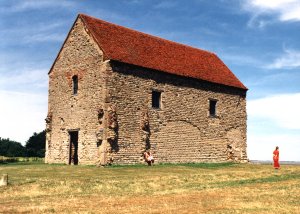
St Peter's on the Wall

St Peter's on the Wall


St., Peter’s stands,
Full of centuried age,
In the midst of dreaming acres.
Surrounding the ancient stones,
Under green banks, are the remains
Of an even earlier occupation.
Othona’s Roman fort, guarding
The Saxon shore faced the same rushing waves.
The same salt-laden gales
Which sang their wild song
Chill the ears of pilgrims
Of the present day as they tread
The path to antiquity and
The time-worn stones of sanctity.

Thursday, November 23, 2006

Sunday, November 05, 2006

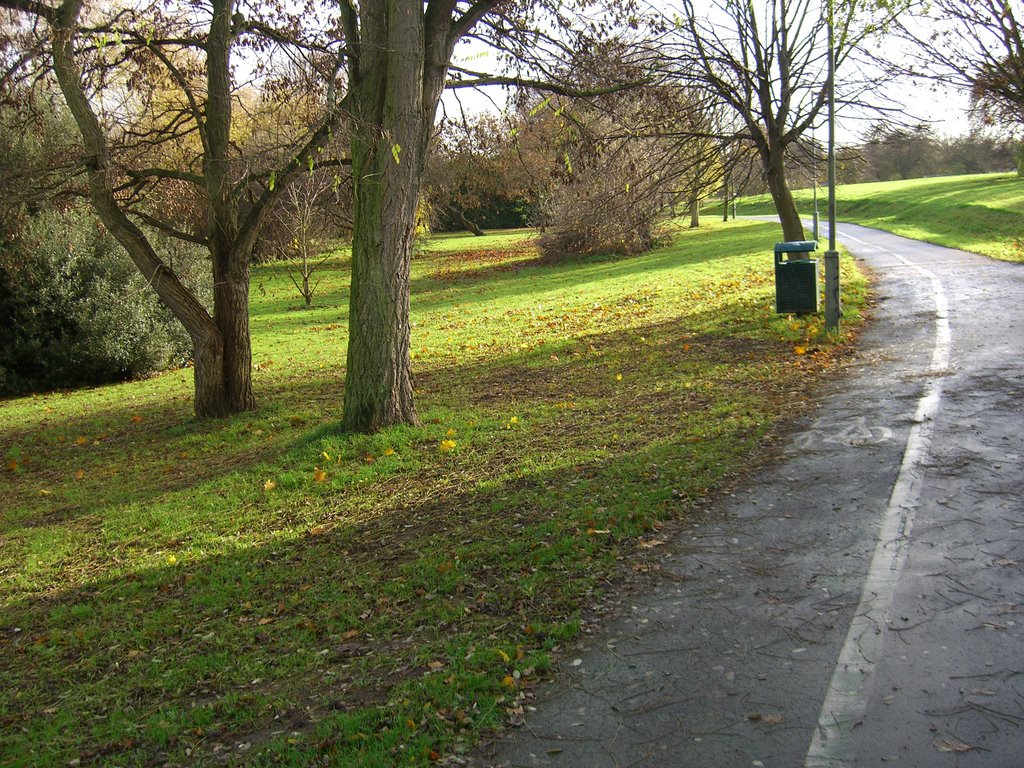
Autumn


Crisp autumn mornings give me something of my childhood;
The chill in the air, the sun bright-shining,
Diamond-strung cobwebs on garden growth,
And dew-sparkling grass, touch some hidden cord
Which reaches back through time
To that distant happiness. They rouse the wish
To trample rustling leaves deeply lying in their
Red-gold masses under glorious trees,
Trees ripe for climbing in those far off days
Before the turmoil of newly attained adulthood
Swept away the child's world
Into the fine-wrought halls of memory.

Friday, November 03, 2006

Friday, August 25, 2006

The Wonder of Woodlands.


I am making a start on this essay without any great idea as to how I am going to set about it. I think a list of woods that have all been a part of my life to a greater or lesser degree will do to begin with. Here we go.

HOCKLEY WOODS, ANCIENT WOODLAND IN ESSEX.

BECKNEY WOODS, ALSO IN HOCKLEY, PART OF PLUMBEROW.

SCRATCH WOODS, ANCIENT WOODLAND IN MIDDLESEX, PART OF THE ANCIENT FOREST OF MIDDLESEX.

MOAT MOUNT, ORNAMENTAL WOODLAND, MOSTLY PLANTED IN VICTORIAN TIMES.

BARN HILL, PART OF WHICH IS ANCIENT WOODLAND, AND PART ORNAMENTALLY PLANTED.

EPPING FOREST, PART OF A MUCH GREATER FOREST, IT NOW BELONGS TO THE PEOPLE OF LONDON. AMBERSBURY BANKS IS A FAVOURITE [PLACE WITHIN THE FOREST.

STRANS WOOD IN UPPER WHARFEDALE I HAVE KNOWN ONLY RECENTLY. IT IS SMALL BUT LOVELY, also STRID WOOD.

THORPE PERROW ARBORETUM, A MOST PEACEFUL PLACE VISITED ONCE BUT WELL REMEMBERED.

This will hopefully give me some inspiration with which make a start.


From an early age I have delighted in woodland. I suppose the earliest time I could have seen trees in large numbers would have been when I was taken by my mother to the park near our home in Highams Park. I was too young to remember this, there is just a vague memory of ducks on a lake, but it would have stayed in my subconscious, I suppose. We left Highams Park when I was four and moved to Hockley in Essex, where I lived till I was married.

This is where my conscious memories of woodland begin.
I was taken to Epping Forest on a Sunday school trip when I was around five or six years old. Unfortunately my main memory of this day is falling off a donkey. My foot being caught in a stirrup I was dragged along the ground, finishing up with a nasty graze on one of my arms. The trees took a second place that day!
As a young child Hockley woods played a great part in pleasurable outings of exploration. With young friends I wandered through the woods delighting in the great oak trees and the thickly grown remains of past coppicing. My Dad took me for walks and explained about the coppice cutting that had taken place, talks which stayed in my mind and was the beginning of my love of trees. Windflowers starred the ground early in the Spring, delicately stirring to the slightest breeze.
There were also huge ants, not so lovable. Their nests were mountains of tiny twigs and whatever else was suitable for them. They got in the way of picnics. I have an idea they were originally put there as food for pheasants. The pheasants were gone and so were the humans who preyed on them, but the ants were flourishing.
While going to Hockley Council School my friend, Jean, and I were allowed to have a picnic meal in the woods once a week, in the summer, of course. We sat in what I thought were old sand pits surrounded by trees, not far from the school, delighting in the short period of freedom in the school day. On other days of the week we went home for our dinner.
There was also the pleasure of eating the sweetest of chestnuts from the massive chestnut trees that grew near to the school playground. There was holly to collect at Christmas time, holly that seemed all the more festive due to the search in the depths of the woods for bushes with berries.
I shall insert a poem here, one that I wrote which I hope gives something of the special feeling that woods had in my childhood heart.


Woodland

How I loved to climb a tree,
To sit up the top of my leafy palace,
Queen of my glorious woodland,
A magical faery world.
A stream ran rippling through the wood,
Steeply banked and deeply pooled,
Bordered with flowers according to their season.
Windflowers, celandines starred the banks with Spring
And my memory with enchantment.


Beckney Woods is in Hockley, overlooking the site of the battle in Canewdon between Edmund Ironside, the son of Aethelred the Unready, and Canute, the Dane. This was often a place for a family walk after Sunday tea. This wood was at its best in Spring when the leaves were pale green and pleated, and the bluebells were even more beautiful than I have seen elsewhere.
Ambersbury Banks in Epping Forest is a place that holds a fascination for me. Maybe it was the place where Boudicca and her followers fought their last battle, maybe it was not. More likely is the theory that it was an Iron Age hill fort that had nothing to do with the Queen of the Iceni. Whatever is the truth of the matter, I feel an atmosphere of the past. Who were the people who built this embankment? What would they think of us, people of modernity? Do their ghosts haunt the spot?
There are great trees now where there must have been open country for there to be any possibility of a battle such as Boudicca and the Iceni fought against the Romans. It is a place to walk and wonder.
One of the most beautiful of woods that I have been in recently is Strid Wood in the grounds of Bolton Abbey, Yorkshire. There are a great many enormous limes and oaks. It was Spring when I walked down to the Strid, that dangerous place where the river Wharfe forces its way hrough through a narrow space in the limestone rocks, and the woodland was at its best. The leaves were so fresh and delicate, bluebells carpeted the ground and scented the air, and whichever way one turned the view was unbelievably lovely. Yet, in spite of saying this, I do believe that if I walked there in the summer the warm fecundity would entrance me, the autumn would cast its own spell, and even in the winter the stark branches would have their own bleak charm.
Woodland near home never loses its fascination, no matter how often the walks take place. They are never the same, Three Middlesex woods immediately come to my mind. They are not extensive, but each is different to the other.
First of all we go to Scratch Wood, which is ancient woodland, and then to Moat Mount, an ornamental woodland planted during the 19th century. The third is Barn Hill which is partly ancient woodland and partly ornamental. Scratch Wood, which was being taken over by rhododendrons, unwisely planted during the last century, is now being cared for. With most of the rhododendrons cleared the vista through the trees is magnificent. To gaze between the trees and down the hill to the admittedly rather small stream is gorgeous. At the far end of the wood there is an area of rhododendrons allowed to grow and flower, so gloriously, in the Spring.
On the other side of the road you can enter Moat Mount Wood. Here there are numbers of simply enormous sequoias, planted in the 19th century. Amongst them there are the Wellingtonia and the Coast redwood. They tower an immense distance up to the sky, nothing like as huge as their American cousins, of course, but to my unaccustomed eyes they are unbelievably tall. There is a lake and interesting tree trails to follow. Besides the sequoias there is a deodar, and turkey oak, Holm oak, Irish yew and an avenue of hornbeams. There is swamp cypress and Norway maple and, of course, the common yew. There are picnic tables if needed, and wide areas of grass for the very young to run about; altogether a very successful suburban wood.
Now we go several miles to get to Barn Hill. Here we have the trees of ancient woodland, and also ornamental trees planted in more modern times. Wellies are often needed here as there is plenty of mud after a spell of wet weather. Wild roses grow in profusion and are a delight to the eye. There is a good sized pond where a heron often stands. Service trees have been planted by the local authority, also crab apples, along one side of the wood there is the remains of an ancient track. There has not been too much 'tidying up'.
A little way up the hill there is an avenue of old poplars, probably planted in the 19th century. The way between them
is very rough (and, of course, muddy at times) but I find it enchanting. As I make my way along I wonder who walked there when the trees were first planted. Over one side there is a fine view of Wembley, though I must say that I prefer the parts where I can imagine I am in the middle of nowhere. I must confess that it is not too easy to imagine as the noise of nearby traffic is constant!
Noise is a problem in town woods, naturally. It can't be otherwise. Even so, these woodlands have the genuine leafy, fungus scent, woodland flowers, the hidden life that we so seldom see, and my great love, the trees themselves. One can close ones ears and delight in woodland, even when near to the busiest of roads.
Back to Yorkshire where there is Thorpe Perrow Arboretum to be wandered through and enjoyed. Conifers flourish in this plantation, and in the Autumn the varied colour of the deciduous trees is lovely. It does not pretend in any way to be a natural woodland and is none the worse for that. It is a place of peace I could happily return to.
Strans Wood in Upper Wharfedale is ancient and proud of it. Growing on the side of a steep fell, the trees are wide spread, and to look through the wood towards the river Wharfe, far below, is a delight. On the way to the wood the walker passes numerous ruined dwellings of peoples of the distant past. Memories of having walked up there are something to be thankful for.
This has been a very imperfect effort at getting some of my feelings about woods onto paper. I hope that anyone who may possibly read this will forgive me.

Friday, August 18, 2006

The Bamberg Man


This Green Man is a beauty. I have seen him in Bamberg Cathedral in Germany.

Sylvia

Sylvia

Sunday, July 30, 2006

The Launderette

The washing whirls round
Seemingly endlessly;
In the air the constant sound
Of busy machinery.
Young lovers kiss while they wait;
Life-worn women
Fold their washing.
"Are they late"? they wonder
For the children from school,
The husbands from work.
An old woman smokes by a drier
Full of tumbling clothes,
While toddlers run and laugh
And one lone man packs a machine.

I wrote this poem quite a number of years ago. If you can find a launderette now I think that it will not be so busy as they all used to be.

Wednesday, June 28, 2006

Then and Now

This will not be an easy piece of writing. I am going to try and compare the time I lived through as a 1930s child with the time I live in now and what it must be like for present day children. Remembered thoughts from the time when I was about four come into my mind. This was the time when I was living in Highams Park. How different my childhood was to that of the child of today. I cannot say which was the best as constant change has been part of the human condition through the centuries, and it will go on that way as long as the human race exists. That is one thing we can be sure of.
Today’s children seem to be so much older than I did at all the different times of life, excluding, of course, babies and toddlers who have probably been much the same through the ages. I feel that today’s children have more to worry about, or is that not true? Is the reality just the fact that yesterday’s children had different worries? Let me have a ponder. How was it in the 1930s? There were many children who lived in the poorest of poor families whose parents struggled along as best as they could. They lived in unsuitable accommodation, wore hand-me-downs and probably did not eat enough. Filling up with bread and jam, or bread and dripping, was well known. To what extent these kids worried I do not really know. The average height of today’s children is taller that those of my childhood. I was taller than most but that was in my genes as would be said today. It must be said that I do not feel particularly tall these days as there are many more tall girls around. Is this because, on average, they have a more nourishing diet?
I think the worry about education must be very great now. Parents are frantic to get their sons and daughters into the best of schools. I am concerned that children whose parents manage to get the school of their choice receive a very good education and go on to university, and that the children who have to go to schools which are now considered very second rate leave school with not a great deal of hope for the future. These low grade schools seem to have many of the roughest and most unruly of children which makes an impossible situation for teachers and the more academically minded students. In the 30s many children left school at fourteen and started work at that much too early age as it would be considered today. Many must have been worthy of a better education than they got, though there were evening classes available to the truly enthusiastic. I think that the worry levels of today are probably much the same as they were during the Depression years of the 30s.
As for myself the possibility of war began to come into my mind as it must have done for many children. Although today there are many states of war in different parts of the world, at present there is not the immediate prospect of war in the EU.
I remember that when I was about twelve years old that there was a shop in Southend that for some reason unknown to me had a window full of shoes from the 1920s. These seemed most ridiculously old fashioned to me. Although the number of years back to the 1920s was comparatively small It seemed great to me. I must remember that today’s kids probably feel the same way about the 1980s. The 1930s must seem an impossible time ago.
Everything I think of is either before the war or after the war. I cannot stop thinking in that way. Childhood was before the war and adulthood after the war. In between was a period of growing up in a very unstable time.
In this year 2002 in London there seems to be constant noise, violence and pollution. A fair part of this feeling of mine must come from the fact that I grew up in an Essex village where noise was slight and not a great many people owned cars. There were tractors in the fields, but also there were cart horses still in use for ploughing, beautiful great creatures with flowing manes and huge hoofs covered with long hair. At certain times of the year a farm labourer would ride up my road when he had finished work for the day. He would be sitting sideways on the back of his horse. His trousers were tied in with string below his knees. I have seen four carthorses released into their field after working all day. They galloped round the field, rolled on their backs and had a wonderful time. Where would you see that today?
The local coalman had a magnificent cart horse to pull his wagon load of coal. There were occasions when he let me travel round the village with him, and hold the reins when he was delivering the coal. This period, of course, was at the very end of the delivery of goods by horse-drawn vehicles, and there were plenty of motors taking bread, milk etc. But there was still what might have been some of the atmosphere of a quieter but not necessarily a better era.
.
These days there is an decidedly different attitude towards marriage than there was in the 30s. Young women who had babies outside marriage were not accepted by most people, though if their family supported them there was more chance for them to come through this experience and continue with their lives. I don’t know what proportion of these mothers kept their babies. I should think that most gave them up for adoption which was a sad state of affairs. Today there are many teenage girls who are not much more than children themselves having babies or abortions, which is by no means an ideal state of affairs, but at least they are not held in contempt to the extent that they were in pre WW2 DAYS.
When I was a young child I remember a girl a few years older then I who was being brought up by her grandparents. She was a friend of mine. Their daughter was not on the scene and I never remember seeing her, but at least I don’t think that the child was held in any contempt by the general community. She was always involved in the various fetes, dancing classes and so on that went on in the village.
I don’t think that I can say whether such happenings are more or less distressing now than they were then, but surely abortions, or even if the baby can be kept, it can never be an ideal thing to happen even in this free and easy era.
I am now having difficulty deciding whether this time or the 1930s was a better time for children to be born. I have reluctantly come to the conclusion that it is an impossible decision to make. People grow up in the time during which they were born, and usually, as they grow older, they don their rose coloured spectacles and wholeheartedly believe that their time was the best time. Or else some prefer to believe that the present day children have everything easy and should be thankful that they did not live in the ‘bad old days’! That is what it all comes down to, ‘the good old days’ or ‘the bad old days’.
What I should wish for all children of the world is enough to eat, a stable environment in which to grow up, and a chance to have an education that would enable them to become responsible adults able to make up their own minds on all matters of importance. Also, and I think this is important, a chance to play.
My good wishes go to all the children of this difficult world in which we live.